Architecture and ownership
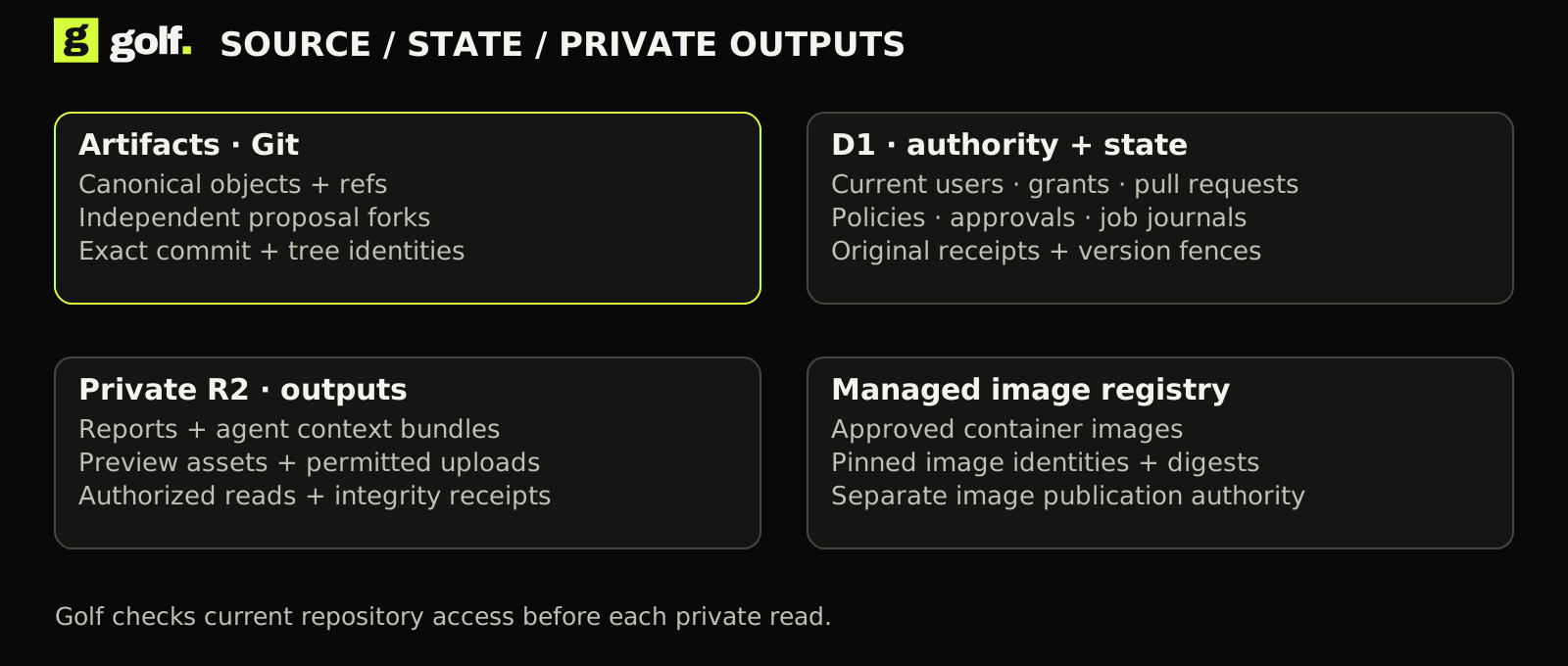
Editable Mermaid source · All ten diagrams.
Golf shares its React interface, fonts, route tree and generated Connect contract across portable and native entries. Runtime capability adapters expose supported behavior; unavailable services are not empty inventories or successful mock operations.
Native Cloudflare
Open the detailed service diagram · Download Mermaid source.
Artifacts owns canonical Git; D1 holds Golf's collaboration, grants and receipts. Durable Objects coordinate work and alarms. Provider tokens stay inside the trusted broker. A current repository grant is required even when the Git object or R2 report is immutable.
The native control Worker embeds the built shared UI. It does not serve its authenticated UI through the Workers Static Assets router; that router's Access identity limitation is documented in the product setup. The independent marketing/docs sites are static Workers asset deployments.
Portable
Open the portable diagram. Golf does not write the forge's database or repository files directly. Privileged offline recovery is a separately documented operation into a fresh, stopped target, with all writers drained; it is not a live-write exception.
Shared contracts
api/golf/v1/golf.proto and companion generated contracts remain authoritative. Browser Connect clients and the Golf CLI reuse these services. TanStack Router owns navigation; TanStack Query holds cancellable private data; forms and loaded inventory tables use the shared product components.
An uncertain provider effect remains uncertain until supported readback settles it. An operation receipt is not a distributed atomic transaction. Read security, native execution and status for the current boundaries.